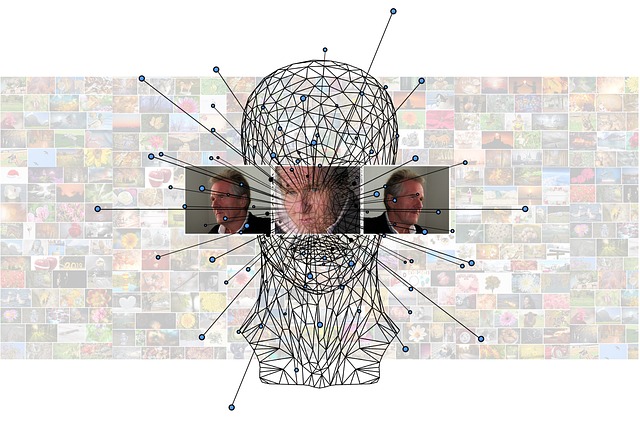
TL;DR: Machine learning models learn by iteratively adjusting internal parameters to minimize prediction error on training data. The key challenge is generalization: making a model that performs well on new, unseen data, not just the examples it was trained on.
When developers say a machine learning model "learns," they mean something mathematically precise: the algorithm adjusts its internal weights or parameters to reduce the difference between what it predicts and the correct answer. This process, repeated thousands or millions of times across a training dataset, is what creates an intelligent-seeming system.
The Training Loop
Most supervised learning models follow the same core cycle: receive an input, make a prediction, calculate the error (loss), and update parameters to reduce that error. This update is typically performed using gradient descent — a method for moving parameters in the direction that most reduces the loss function.
Overfitting vs. Underfitting
| Problem | What it means | How to detect it | How to fix it |
|---|---|---|---|
| Overfitting | Model memorizes training data, fails on new data | High training accuracy, low validation accuracy | Regularization, dropout, more training data |
| Underfitting | Model too simple to capture patterns | Low accuracy on both training and validation | More complex model, more features, less regularization |
| Good fit | Model generalizes well to unseen data | Similar accuracy on training and validation sets | Maintain current architecture and hyperparameters |
Validation and Test Sets
Splitting data into training, validation, and test sets is non-negotiable in practice. The training set teaches the model. The validation set guides hyperparameter tuning and architecture decisions. The test set provides a clean, unbiased estimate of real-world performance. Using the test set for tuning invalidates the evaluation.
Choosing the Right Model
- Tabular data with few features: gradient boosting (XGBoost, LightGBM) is usually the first choice.
- Image recognition: convolutional neural networks (CNNs) or transfer learning from pretrained models.
- Text classification or generation: transformer-based models like BERT variants or GPT-class systems.
- Small datasets: simpler models with strong regularization outperform deep networks.
What This Means in Practice
Understanding the training process helps you debug models, set realistic accuracy expectations, and evaluate vendor claims. When a supplier says their model is "99% accurate," ask: on what dataset, under what conditions, and how was it validated? The gap between benchmark accuracy and production accuracy is where most ML projects face their hardest challenges.
Ready to go deeper? Read our Predictive Analytics article to see how trained ML models are applied to real-world forecasting pipelines at Smart Machine Daily.
Related Posts
Industrial Robots in 2026 | AI Chatbots in the Enterprise | Predictive Analytics Explained