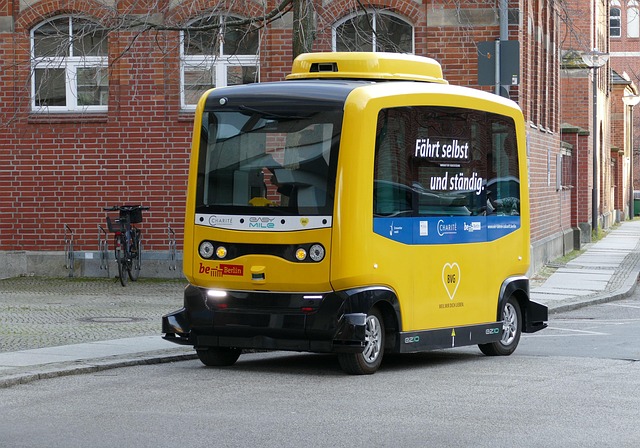
TL;DR: Autonomous vehicles combine multiple sensor modalities with machine learning perception to interpret the environment and make driving decisions. The technology works well in controlled conditions but still struggles with unpredictable real-world edge cases.
Autonomous vehicle development has been one of the most visible frontiers of applied AI for the past decade. The core challenge is not speed or compute — it is reliability. A human driver can handle a toddler running into the street, a mattress falling from a truck, or a hand-waving pedestrian at a crosswalk. Machines are learning to do the same.
The Sensor Stack
Most production and near-production autonomous systems use a combination of sensors because no single sensor type is sufficient:
| Sensor | Strength | Weakness |
|---|---|---|
| LiDAR | Precise 3D point cloud mapping | Expensive; reduced performance in heavy rain or snow |
| Camera | Rich visual detail, color, text recognition | Fails in low light; no direct depth measurement |
| Radar | Works in all weather; measures velocity | Low resolution; cannot identify object type reliably |
| GPS/HD Maps | Localizes vehicle in a known environment | Requires up-to-date maps; GPS degrades in tunnels/cities |
Perception: What the Machine Sees
Raw sensor data must be processed into a usable scene understanding. This involves object detection (what is around the car), object tracking (where each object is moving), semantic segmentation (what is road vs. sidewalk vs. building), and depth estimation. Each step uses dedicated neural network architectures, often running in parallel on specialized hardware.
The Long Tail Problem
The "long tail" refers to the vast number of rare but safety-critical scenarios that are underrepresented in training data. A model may handle 99.9% of driving conditions perfectly but fail on the unusual 0.1% — and in safety-critical systems, that 0.1% matters enormously. This is why testing for autonomy is measured in billions of miles, not millions.
Deployment Reality in 2026
- Robotaxis operate commercially in geofenced areas where HD maps and weather conditions are well understood.
- Highway autopilot features are widely available in premium vehicles but require driver supervision.
- Fully unsupervised urban autonomy remains a solved-in-demos, challenging-in-production problem.
- Trucking and port logistics are among the fastest-growing commercial deployment environments.
For engineers evaluating AV technology: look at operational design domain (ODD) restrictions, disengagement rates, and third-party safety validation records rather than demo videos. Contact Smart Machine Daily for custom briefings on autonomous system evaluation frameworks.
Related Posts
How Machine Learning Models Actually Learn | Industrial Robots in 2026 | Smart Home IoT